Intelligent modification of images is all the rage at the moment, especially with Photoshop CS5's fancy new tools for healing imperfections in the image... This is my take on a classic implementation of intelligent image shrinking, using an edge detection to determine the bits of the picture that are "interesting" then drawing seams down the image through the boring regions and then removing pixels along this path.
This implementation is 100% coded from scratch and can be used for any project under the terms of the
GPL v2 or later.
The test image:

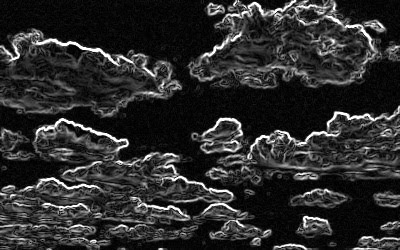
The edge detection to find objects:
And 5 example low detail vertical "seams" which run through the image. These are the lines of boring pixels which will be removed to make the image narrower.

Removing 100 seams of pixels makes the image 100px narrower. See the following images for an example of the resizing in progress:



You can watch the scaling of four example images at
YouTube.

Download the code for the ImageJ macro (used for rescaling of these images)
here.
Software used:
Image creation:
ImageJVideo transcoding:
VLC media player


 The edge detection to find objects:
 And 5 example low detail vertical "seams" which run through the image. These are the lines of boring pixels which will be removed to make the image narrower.
 Removing 100 seams of pixels makes the image 100px narrower. See the following images for an example of the resizing in progress:

 You can watch the scaling of four example images at YouTube.
 Basing the pinhole on a camera body cap makes it very simple to handle, it can be swapped on and off like a normal lens and has no problems with light leakage etc.
 The pinhole is handmade from a piece of 0.5mm aluminium with a hole poked through using a penkife and safety pin.
 Given it is 100% handmade and stuck together with tape it gives impressively good results!
 If you are interested in making one yourself check out my instructables project with step by step instructions.


